Hablamos Español

877-792-9360

hello@routeway360.com

Hablamos Español

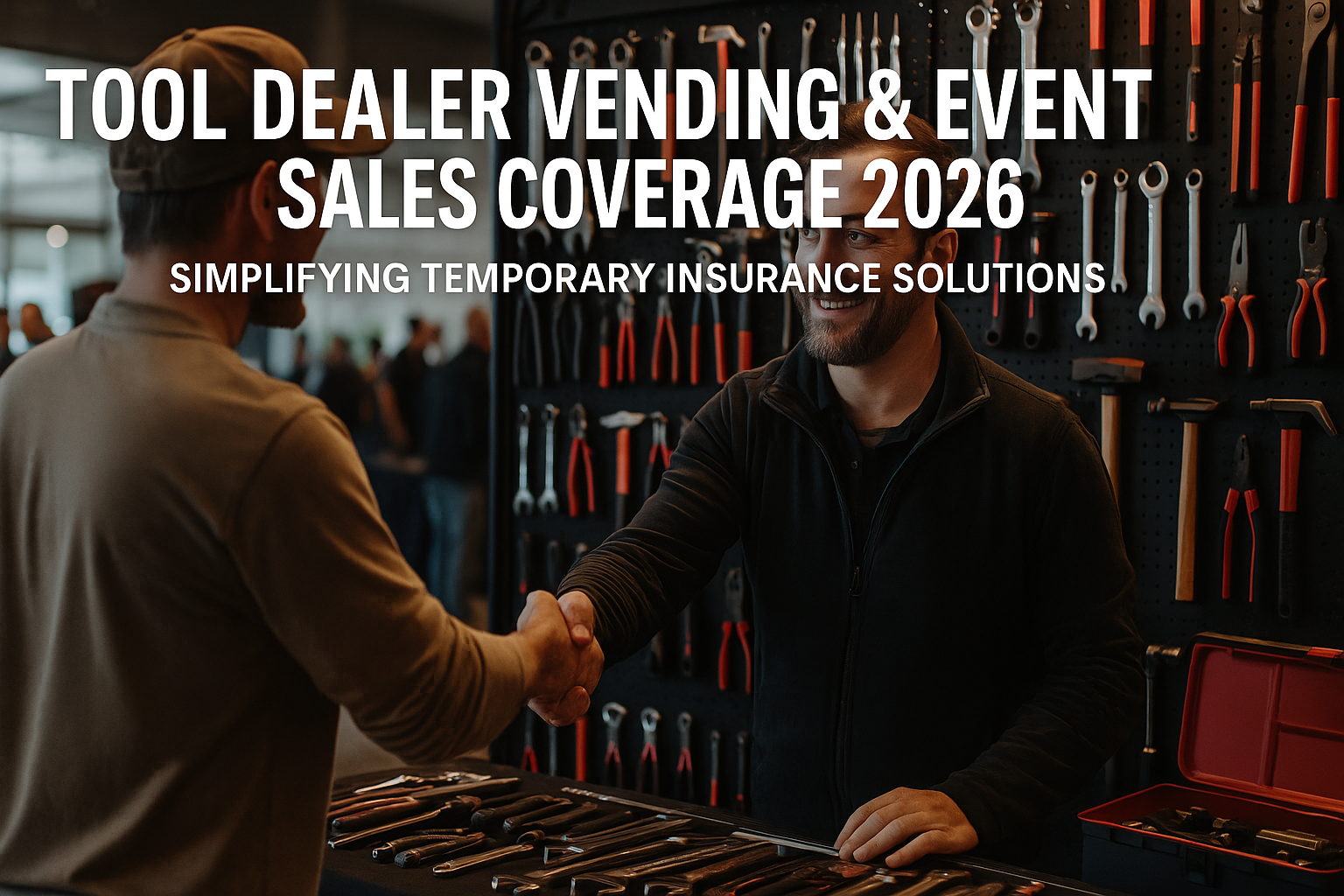
Tool Dealer Vending & Event Sales Coverage 2026

Uncategorized

Tool Dealer Vending & Event Sales Coverage 2026: Simplifying Temporary Insurance Solutions

Tool dealers and vendors, gear up for an exciting 2026 event season packed with trade shows, vending gigs, and tool expos full of eager buyers. But here’s the deal: success goes beyond having great inventory or a sharp sales pitch. You need reliable insurance coverage to manage those business risks. That’s where Tool Dealer Vending & Event Sales Coverage 2026 from Routeway360 steps in—offering affordable, short-term liability insurance designed specifically for your temporary event ventures.

Get a tailored quote today to keep your business and equipment protected no matter where your events take you.

TransRoute Logistics branded white box truck unloading tool crates at an outdoor event during golden hour

Why Temporary Coverage Matters for Tool Dealers and Vending Events

Tool dealers regularly encounter dynamic event schedules, including:

  • Tool trade shows
  • Vendor fairs and expos
  • Community or industry festivals
  • Pop-up retail or mobile vending

Each event type carries unique risks—like property damage, visitor injuries, or product liability claims. Unfortunately, standard insurance policies often don’t fully cover these short-term or mobile situations or demand costly annual premiums that don’t make sense for just a few scattered events.

Temporary event coverage fills that gap by providing short-term liability insurance only for the days you actually need it. Why is this crucial? Because:

  • Risk exposure: Temporary events bring different risks than a permanent storefront or steady wholesale operation.
  • Compliance: Event organizers typically require proof of insurance to participate.
  • Cost efficiency: You pay only for the coverage necessary, saving money and avoiding unnecessary premiums.

Routeway360’s short-term policies give tool dealers flexible, budget-conscious options that shield both you and your customers throughout 2026’s busy event calendar.

Want to learn more? Explore tool dealer coverage options from Routeway360.

Tool display booth at event with vendor using tools

What Does Tool Dealer Vending & Event Coverage Include?

Routeway360’s 2026 short-term coverage targets the key risks you’ll encounter at vending events and tool shows. Here’s what’s typically included:

1. General Liability Protection

This protects you if someone trips over your booth or your product accidentally damages another vendor’s equipment. It covers legal fees and settlements if third parties experience bodily injury or property damage during the event.

2. Product Liability

If your tools might cause injury or damage after purchase, this coverage guards against claims related to defects or accidents tied to items sold at the event.

3. Property Coverage

Your merchandise, tools, and equipment face risks at temporary venues. Property coverage protects against theft, damage, or loss while you’re on-site.

4. Event Cancellation Protection (Optional)

If weather or venue issues cancel the event, this add-on can reimburse you for non-refundable costs like booth fees or shipping expenses.

Altogether, these coverages provide tool dealers peace of mind by addressing the main liabilities that come with vending and event sales.

For similar coverage insight, check out mobile service business insurance, which shares some of the same temporary coverage needs.

Tool vendor preparing event booth with tools and equipment

Getting the Most from Your Temporary Coverage in 2026

Making smart insurance decisions will help your events run smoothly. Consider these tips to maximize your policy benefits:

  1. Assess Your Event Schedule: List all confirmed and potential 2026 events to ensure your coverage dates align perfectly. Some policies even cover multiple events throughout the season.
  2. Understand Coverage Limits: Verify liability and property limits to match your vending setup size and the value of your tools and products.
  3. Confirm Venue Requirements: Event organizers often demand minimum insurance coverage—make sure you meet their standards without issues.
  4. Bundle When Possible: If you have permanent business locations or route services, bundling those policies with your temporary coverage can save money and reduce paperwork.
  5. Work With Specialized Providers: Choose insurers like Routeway360 that understand tool dealer risks and vending needs—generic policies often miss the mark.

Follow these steps to ensure you’re not just insured, but fully prepared to conquer 2026’s events confidently.

For ongoing protection, explore wholesale & distributor insurance.

Event vendor reviewing insurance documents during setup

Benefits of Choosing Routeway360 for Your Tool Dealer Event Coverage

Routeway360 stands out as a trusted partner for tool dealers seeking temporary event coverage. Here’s what makes them a smart choice:

  • Affordability: Budget-friendly short-term rates designed for small to mid-sized tool vendors.
  • Flexibility: Customizable policies for single-day events, multi-day shows, or entire seasons—tailored to your needs.
  • Expertise: Specialized understanding of tool dealer risks means coverage that fits your business, not generic one-size-fits-all plans.
  • Streamlined Quotes: Fast, simple online applications get you covered quickly without the usual paperwork hassle.
  • Comprehensive Options: Optional add-ons for mobile services or route insurance help support your business’s growth.

With Routeway360, you cut through insurance jargon and focus on what counts—delivering quality tools to eager customers throughout 2026.

Interested in other options? Check out waste management route insurance.

Tool vendor happily interacting with customer at event booth

Preparing for 2026: Steps to Secure Your Event Liability Insurance

Ready to secure your event insurance? Use this straightforward checklist:

  1. Determine Your Event Plans: Gather details like dates, venues, expected crowd size, and booth dimensions.
  2. Contact Routeway360 for a Quote: Share your information online or speak with an expert to customize your tool dealer event coverage.
  3. Compare Coverage Levels: Review what’s included, excluded, and the coverage limits to make an informed decision.
  4. Purchase the Policy: Obtain coverage before the event—it’s usually required for entry.
  5. Keep Documentation Handy: Always have proof of insurance at every show—you never know when it might come in handy.

Don’t wait until the last minute. Early preparation reduces risk and lets you concentrate on what matters most: boosting sales and building customer relationships.

Consider also incorporation services to strengthen your business’s legal foundation alongside your insurance.

Frequently Asked Questions (FAQs) About Tool Dealer Vending Coverage

Q1: How long can I get temporary event insurance for?

Policies typically cover durations ranging from a single day to several weeks or even the entire event season. Multi-event packages for multiple shows are often available, providing flexible options.

Q2: Does the coverage protect my tools if stolen at an event?

Yes! Property coverage in these plans generally protects your tools and inventory against theft, loss, or damage while you’re participating in the event.

Q3: Are these temporary policies suitable for pop-up stores or mobile vending?

Absolutely. Routeway360’s temporary coverage is designed to support all types of short-term sales operations, including pop-up shops.

Q4: Can I add product liability insurance to my short-term policy?

Definitely. Product liability coverage is often available as an add-on or included to protect against claims related to products you’ve sold.

Q5: What happens if an event is canceled last minute?

Some policies include event cancellation coverage or endorsements that reimburse you for non-refundable expenses if the event is unexpectedly canceled.

Conclusion: Secure Your Tool Dealer Events Confidently in 2026

Participating in tool trade shows, vending fairs, and mobile sales can significantly boost your 2026 sales and brand visibility. But without proper insurance, those risks can hold you back. Typical commercial insurance often falls short for these niche, temporary needs—that’s exactly where Routeway360’s affordable, flexible tool dealer vending and event sales coverage makes a difference.

Benefit from insurance crafted just for tool dealers at vending events, covering liability, property, and product protection. Stay compliant with event requirements, safeguard your assets, and save money by avoiding costly long-term premiums.

Get a tailored quote now and make 2026 your safest, smartest, and most successful event season ever.

Flowers Foods vs Regional Bakeries: Best Fit for Independent Bakers 2026

Uncategorized

Flowers Foods vs Regional Bakeries: Best Fit for Independent Bakers 2026

As the bakery industry continues to rise—much like your perfect sourdough—independent bakers and regional operators face a crucial decision in 2026: Should you partner with a national leader like Flowers Foods or stick close to home with regional bakeries? From supply chain challenges and product offerings to insurance and banking needs, these two choices present very different paths.

If you’re navigating your own bakery business, understanding the advantages and drawbacks of each option can make all the difference. Ready to safeguard your business no matter which route you choose? Get a tailored insurance quote today to suit your bakery’s unique scale and style.

SwiftHaul Express bakery delivery truck and workers at an independent bakery in early golden hour

The National Strength of Flowers Foods in 2026

Flowers Foods remains a powerhouse in America’s bakery scene, and in 2026, their reach continues to grow far and wide. Their high-volume operations offer efficiency, strong brand recognition, and strict quality standards that many independent bakers trust. Here’s what defines Flowers Foods’ national model in 2026:

  • Supply Chain and Distribution: Backed by a vast logistics network, Flowers Foods delivers reliably across multiple states. However, their emphasis on large-volume orders offers less flexibility but greater economies of scale.
  • Insurance and Liability Standards: With a nationwide footprint comes extensive insurance requirements. Partners must maintain commercial general liability, product liability, auto coverage, and sometimes specialized policies like tool dealer insurance to cover delivery equipment.
  • Brand Consistency and Quality Controls: To maintain a spotless reputation, Flowers Foods enforces rigorous quality standards—covering ingredients, packaging, and even marketing materials along retail routes.
  • Technology Integration: Prepare to connect digitally—Flowers Foods typically requires advanced inventory and route-management software so distributors can keep operations seamless and reporting precise.

For route operators seeking stability and a trusted product line, Flowers Foods is a dependable choice. But those valuing creative freedom may find their requirements somewhat restrictive.

Curious about coverage? Explore food and beverage insurance options designed specifically for bakery distributors.

Local regional bakery with artisan breads and personalized packaging on display

Advantages and Challenges of Regional Bakeries in 2026

Regional bakeries thrive by offering distinct flavors and personal touches in their local markets, catering to artisan preferences and bespoke creations. If you want to maintain a close connection to your brand and adapt product offerings flexibly, regional partnerships could be ideal.

  • Flexible Product Lines: Regional bakeries typically craft a broader range of custom items, including specialty diet options, seasonal delights, and exclusive packaging unavailable in national brands.
  • Localized Supply Chain: Operating on a smaller scale means sourcing ingredients locally, reducing shipping expenses and carbon impact, while strengthening community ties. Delivery routes can also be customized rather than standardized.
  • Insurance Simplicity: Insurance is often more straightforward here. Options like mobile service business insurance provide coverage tailored to smaller-scale operations without excessive cost.
  • Brand Identity Control: Partnering with regional firms allows greater control over your story, marketing efforts, and local loyalty initiatives that truly resonate.

However, regional bakeries also face challenges such as limited distribution reach, fewer automation benefits, and vulnerability to local economic shifts. Operators in these markets should be prepared for more hands-on inventory and marketing responsibilities.

Want to find out more? Discover the benefits of waste management route insurance designed for smaller local distributors.

Close up of business contracts, insurance policies, and accounting documents on a tidy desktop

Business and Insurance Requirements Compared: National vs Regional

Understanding the different compliance and insurance demands between Flowers Foods and regional bakery partners is vital for independents aiming to grow in 2026 and beyond.

Essential Insurance Coverage

If you work with Flowers Foods, expect to maintain:

  • Comprehensive commercial liability insurance suited for nationwide product distribution
  • Fleet insurance covering a large number of delivery vehicles across states
  • Workers’ compensation protecting a sizable delivery and warehouse workforce
  • Product recall insurance aligned with national food safety regulations

Regional bakery partners generally focus on:

  • Business owner’s policies tailored for smaller-scale production and delivery
  • Mobile service business insurance, ideal for routes with multiple stops and perishable goods
  • Adjustable coverage limits matching a more modest operational scope

These insurance variations influence premiums, risk management, and how smoothly your business runs.

Business and Banking Insights

National chains like Flowers Foods often require:

  • Incorporation in multiple states with rigorous compliance standards
  • Advanced accounting systems integrated with route management technologies
  • Banking setups equipped to handle high transaction volumes and payrolls

Regional bakery operators often benefit from:

  • Simpler incorporation procedures for faster, cost-effective startups
  • Bank accounts suited for smaller revenue streams
  • More personalized service through small business banking solutions

Business consultant advising independent bakery owners with documents and digital tablet

Finding Your Perfect Match: Routeway360’s Support for Independent Bakers

Choosing between the nationwide might of Flowers Foods and the distinct charm of regional bakeries depends largely on your business ambitions, growth plans, and risk tolerance. That’s where Routeway360 comes in—providing clear, customized guidance to help you make informed decisions.

We understand that independents fall between strict national rules and the flexibility of local operations. Whether you need the dependable protection of wholesale & distributor insurance or the agility of incorporation services to fuel your growth, we offer expert advice tailored just for you.

Thinking about buying or selling a bakery route? Our deep market insight ensures you secure great deals and experience smooth transitions—critical as the bakery landscape evolves in 2026.

Learn more about how our buy or sell a route services perfectly align with your bakery’s strategy.

Conclusion

The bakery industry in 2026 blends complex supply chains and compliance demands, leaving independent bakers with a key question: opt for the consistent footprint of Flowers Foods or embrace the adaptable spirit of regional bakeries.

By understanding insurance, banking, and operational requirements, you can chart a path toward steady growth and a brand that truly flourishes. Partnering with Routeway360 delivers savvy insights and customized insurance solutions to confidently navigate these challenges and keep your bakery thriving.

Get a tailored insurance quote today to ensure the best coverage and support for your bakery route or business.

FAQs: Flowers Foods vs Regional Bakeries 2026

Q1: What are the main insurance differences for distributors working with Flowers Foods versus regional bakeries?

Distributors partnered with Flowers Foods must meet stringent nationwide insurance mandates, including extensive product liability and fleet coverage, while regional bakery distributors typically opt for more flexible policies suited to smaller operations—often resulting in cost savings.

Q2: How does technology integration vary between national and regional bakery routes?

Flowers Foods requires distributors to utilize advanced inventory and route management systems, emphasizing technological proficiency, whereas regional bakeries often rely on more manual yet flexible tools, providing operational agility on a smaller scale.

Q3: Can independent route owners easily switch between Flowers Foods and regional bakery partnerships?

Switching partnerships can be challenging—differences in compliance and supply agreements might complicate transitions. Working with a specialist can ease the process and reduce stress.

Q4: Which business banking options best support independent bakeries in 2026?

Regional bakeries usually benefit from personalized small business banking services, while Flowers Foods distributors require banking solutions capable of handling high transaction volumes. Receiving tailored banking advice is essential to managing cash flow effectively.