Hablamos Español

877-792-9360

hello@routeway360.com

Hablamos Español

Essential Cyber Insurance for Tool Dealers in 2026

Uncategorized

Essential Cyber Insurance for Tool Dealers in 2026

In today’s ultra-connected environment, mobile tool dealers face evolving cyber threats that can disrupt operations, harm reputations, and erode customer confidence. As 2026 unfolds, cyber risks are accelerating faster than a power drill on turbo mode. That’s why specialized cyber insurance—with tailored data breach add-ons—is indispensable. Routeway360 understands these challenges and offers affordable, customized cyber protection for tool dealers designed to tackle these risks head-on.

Request a personalized quote

Modern white TransRoute Logistics box truck with workers checking inventory and consulting a digital tablet at a highway rest area during golden hour

Why Cyber Insurance Is Vital for Mobile Tool Dealers in 2026

Mobile tool dealers are always on the move—traveling between job sites, warehouses, and customer locations. They depend on mobile devices, cloud-based inventory systems, and point-of-sale tools, all of which can expose them to cyber threats. In 2026, these hazards—including ransomware, credential theft, and phishing scams—target small and mid-sized businesses more aggressively than ever.

Cyber insurance acts as your safety net, covering financial losses from data breaches, privacy violations, ransomware lockouts, and cyber extortion. However, generic policies often fall short because they don’t address the unique vulnerabilities that mobile tool dealers face.

Custom cyber insurance policies tailored specifically for tool dealers are a game changer—offering coverage for customer databases, payment processing, and mobile service data networks.

Key Cyber Risks Facing Tool Dealers

  • Data breaches: Theft of sensitive customer or vendor information, such as payment details or contracts.
  • Ransomware attacks: Cybercriminals locking down business systems until a ransom is paid.
  • Phishing and social engineering: Tricks designed to deceive employees into revealing passwords or installing malware.
  • Mobile device vulnerabilities: Loss or compromise of laptops, tablets, or smartphones while out in the field.
  • Supply chain attacks: Threats entering through third-party software or service providers that impact your operations.

Understanding these risks is the first step toward securing cyber insurance that truly protects—with the right data breach add-ons included.

Illustration of digital shield protecting data with malware icons around

Data Breach Add-Ons: A Crucial Feature in 2026 Coverage

The standout enhancement in 2026 cyber insurance is the data breach add-on designed especially for mobile tool dealers. Think of it as cyber insurance with a secret weapon—extending your coverage to meet the specific challenges of handling customer and vendor data securely.

Typical add-on benefits include:

  • Incident response support: Immediate access to forensic investigators and legal advisors to manage breaches effectively.
  • Notification costs: Coverage for mandatory communication expenses to customers or partners affected by a breach.
  • Credit monitoring services: Identity protection for individuals whose data may have been compromised.
  • Public relations management: Assistance in maintaining your reputation and customer trust after an incident.
  • Regulatory fines and penalties: Financial protection against government-imposed data protection fines.

These additions don’t just offer financial aid—they provide a comprehensive response strategy that minimizes downtime and keeps your business moving forward.

Interested in further protecting your mobile service enterprise? Discover mobile service business insurance with cyber add-ons.

Smiling business people discussing insurance plans on digital tablet

How Routeway360 Makes Cyber Insurance Affordable and Effective

Cyber insurance can seem complex or expensive, but Routeway360 changes the narrative by offering tailored, cost-effective plans designed specifically for mobile tool dealers.

Here’s what sets Routeway360 apart:

  • Customized coverage plans: Built around your day-to-day operations, including mobile payments and service calls on the go.
  • Competitive pricing: Using specialized underwriting and industry data to keep rates affordable without sacrificing protection.
  • User-friendly claims support: 24/7 expert assistance familiar with tool dealer cyber incidents to expedite claims.
  • Bundled insurance options: Combine cyber coverage with tool dealer liability or commercial auto insurance for your fleet.
  • Educational resources: Practical guidance on cyber risk management and data privacy that can reduce your risk and premiums.

Ready to protect your tool dealership effectively? Visit their detailed tool dealer insurance coverage page to learn more.

Hand working on laptop with cybersecurity icons floating around

Proactive Cybersecurity Measures for Tool Dealers

Good cyber insurance is essential, but it’s even more effective combined with strong risk management. Every tool dealer can strengthen their defenses with these steps:

  1. Employee training: Educate your team on spotting phishing, securing mobile devices, and handling sensitive information carefully.
  2. Secure remote access: Employ VPNs and multi-factor authentication to safeguard remote connections.
  3. Data backups: Maintain regular, encrypted backups with offline copies to recover quickly from ransomware without paying a ransom.
  4. Inventory management systems: Use reputable, up-to-date software solutions to protect your tools and sales data.
  5. Vendor assessments: Ensure third-party partners, especially cloud or remote providers, meet your cybersecurity standards.

Combining these practices with comprehensive cyber insurance creates a strong defense that keeps your business resilient against digital threats.

Frequently Asked Questions About Tool Dealer Cyber Insurance

What is covered under cyber insurance for tool dealers?

Coverage usually includes data breaches, ransomware attacks, network security failures, notification expenses, legal fees, and business interruption losses related to cyber incidents.

Why are data breach add-ons important for tool dealers?

Because tool dealers handle sensitive customer and payment information, breaches pose serious risks. Add-ons cover notification costs, credit monitoring, and regulatory fines often excluded from standard policies.

How much does cyber insurance for a mobile tool dealer cost?

Costs vary depending on business size, coverage, and risk factors—but Routeway360 provides competitively priced options tailored to small and mobile tool dealers.

Can I bundle cyber insurance with other policies?

Absolutely. Bundling cyber coverage with general liability, commercial auto for your routes, and tool dealer liability policies can offer discounts and simplify your insurance management.

What should I do immediately after a cyber incident?

Act quickly: notify your insurer, isolate affected systems, consult forensic experts, and follow your incident response plan. Policies with data breach add-ons often include expert guidance to help you through.

Conclusion: Preparing Your Tool Dealership for Cyber Threats in 2026

Cyber threats targeting mobile tool dealers are intensifying as we head into 2026. Protect your business with cyber insurance designed for your unique risks, including essential data breach add-ons. Routeway360’s affordable, comprehensive tool dealer cyber coverage equips you to face these challenges with confidence.

Don’t wait until a cyber threat disrupts your operations—secure your business with effective cyber protection today. Get a tailored quote now and keep your mobile tool dealership safe from tomorrow’s digital risks.
DSD Operator Insurance Checklist for 2026

Uncategorized

DSD Operator Insurance Checklist for 2026

Starting a new independent bread or snack distribution route in 2026 is an exciting journey—but don’t let that excitement eclipse the vital insurance essentials that protect your business and keep you compliant from day one. Whether you’re launching your first distribution route or taking over an existing one, understanding your insurance requirements safeguards your assets, minimizes risks, and ensures your operations stay on track.

Get a tailored quote to begin your coverage and start your route business confidently.

Modern white box truck branded SwiftHaul Express unloading bread and snack packages at warehouse dock

Why Is Insurance Essential for New DSD Operators?

Direct Store Delivery (DSD) operators face unique daily challenges—from handling fresh bread and snacks to managing multiple delivery stops. Insurance is more than just paperwork; it acts as your financial shield against incidents like accidents, vehicle damage, theft, or product liability claims. Skipping adequate coverage could jeopardize your investment and livelihood.

Many new operators underestimate their insurance needs in the food and beverage delivery arena. Securing a comprehensive, industry-specific plan tailored to your route details is crucial. Investing time early to understand and secure the right insurance policies paves the way for smooth and successful operations.

2026 Insurance Checklist for New Independent Bread or Snack Route Buyers

Here’s a straightforward list of insurance policies and considerations every new DSD operator should address before hitting the road in 2026.

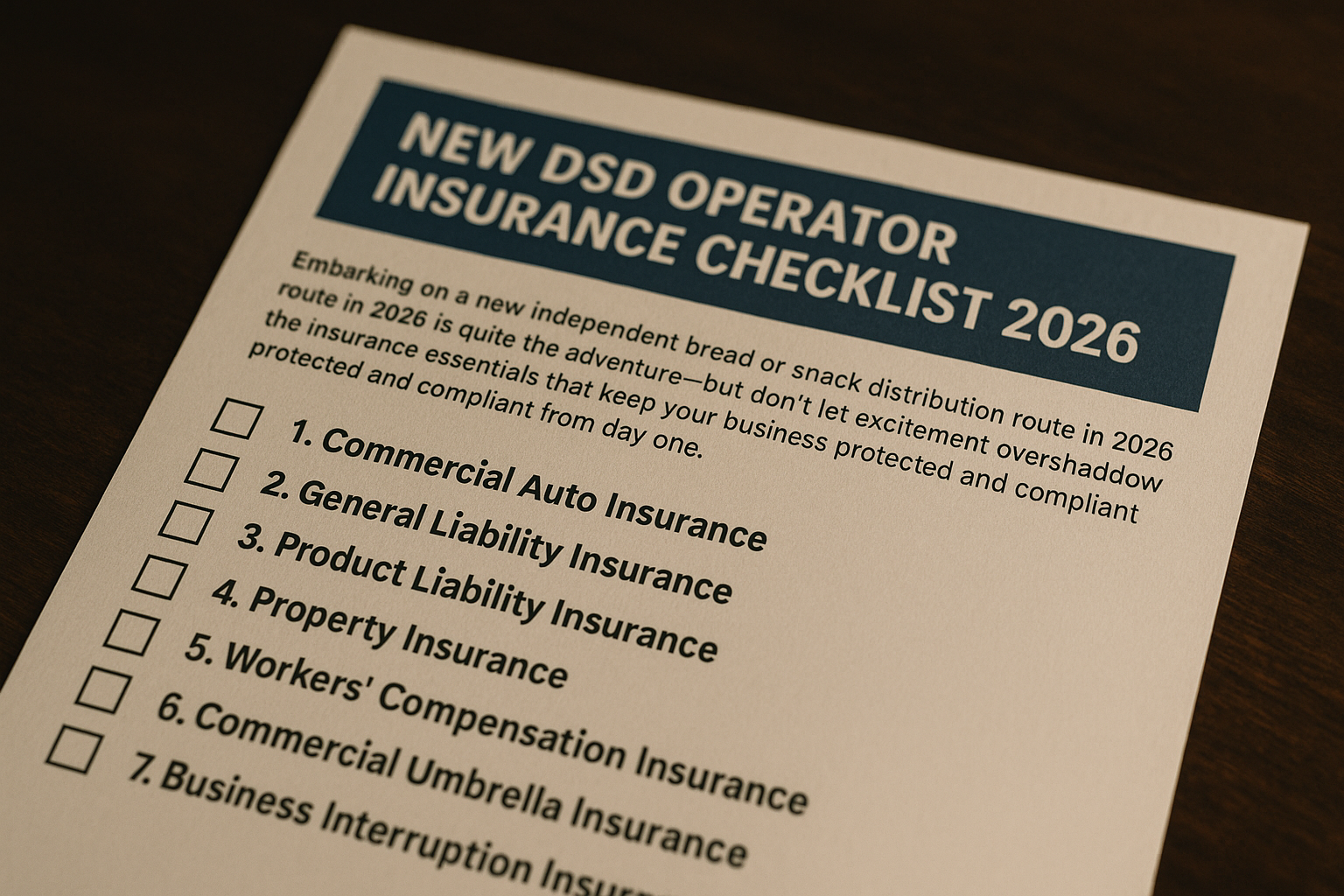
1. Commercial Auto Insurance

Your delivery vehicle powers your business. Commercial auto insurance covers liability and physical damage for your work vehicles—trucks, vans, or refrigerated units. Important: personal auto policies usually exclude business use, so they won’t suffice for your route.

  • Liability coverage: Protects you if your vehicle causes bodily injury or property damage to others.
  • Comprehensive and collision: Covers repair costs from accidents, weather damage, or theft affecting your vehicle.
  • Uninsured motorist: Shields you if another driver at fault doesn’t have insurance.

Pro tip: Planning to expand or manage multiple vehicles? Make sure your policy includes multi-vehicle coverage. For expert guidance, explore our food and beverage insurance solutions designed to fit your needs.

2. General Liability Insurance

This insurance acts as your business’s protector against claims from customers or suppliers alleging injury or property damage linked to your operations—like slips during delivery or accidental damage to retailer property.

  • Typically covers legal expenses, settlements, or judgments.
  • Helps maintain strong and trustworthy professional relationships.

3. Product Liability Insurance

Risks aren’t limited to vehicles. As a bread or snack distributor, product liability insurance safeguards you from lawsuits arising from contaminated, spoiled, or defective products. Foodborne illnesses or allergen incidents can cause serious legal issues, even if unintentional.

This coverage should reflect your product types and your storage methods, especially for perishables requiring refrigeration or special handling.

4. Property Insurance

If you operate out of a warehouse, storage facility, or even your home base, property insurance protects your tangible assets—inventory, shelving, packaging materials—from theft or damage.

  • Ensure refrigerated units and specialized equipment are included.
  • Remember that landlords’ insurance policies often exclude your belongings, so verify carefully.

5. Workers’ Compensation Insurance

Employing staff or helpers? Workers’ compensation is mandatory in most states; it covers medical costs and lost wages if someone is injured at work.

If you’re flying solo initially, plan ahead. As your team grows, this coverage becomes vital. Work with specialists who understand mobile service business insurance to get it right.

6. Commercial Umbrella Insurance

Consider this your business’s added financial safety net—providing extra liability coverage beyond general liability and auto insurance. Given the high stakes of lawsuits in the food route industry, an umbrella policy can shield you from costly surprises.

7. Business Interruption Insurance

Keeping your bread and snacks flowing on time is key to customer satisfaction. Business interruption insurance covers lost income if disruptions occur due to covered events like natural disasters or equipment failures.

Though often overlooked by startups, it’s a wise safeguard for unexpected setbacks.

Important Steps to Get Insured Properly in 2026

Understand Your Route’s Specific Risks

Examine your delivery operation closely. Is it statewide, regional, or local? What products are you distributing? Are refrigerated trucks involved? These factors determine your insurance needs—so customize accordingly.

Partner with a Route Business Insurance Specialist

Insurance providers familiar with wholesale and distributor insurance can craft policies that address your unique risks. Routeway360 offers expert advice to help new operators avoid expensive coverage gaps.

Keep Thorough Documentation

When applying, have your business license, vehicle registrations, and route agreements ready. Well-organized records and proof of training streamline claims and demonstrate your professionalism to clients.

Review Your Coverage Annually

Your insurance needs will change as your route expands, your fleet grows, or you add new products. An annual review with your broker ensures you maintain proper, cost-effective coverage.

FAQ: New DSD Operator Insurance 2026

Q1: Can I rely on my personal auto insurance for deliveries?

No. Most personal auto insurance policies exclude business use, leaving you vulnerable. Commercial auto insurance is essential for protecting your delivery vehicles and business operations.

Q2: How much general liability coverage should I have?

Coverage needs vary, but $1 million per occurrence is a common starting point. Consult your insurer to determine coverage that suits your bread or snack distribution business.

Q3: Does product liability insurance cover spoilage?

Product liability insurance generally covers bodily injury claims caused by defective or contaminated products but not spoilage losses. To protect inventory loss, you might need additional property or spoilage-specific insurance.

Q4: How can I lower my insurance premiums?

Maintain clean driving records, equip vehicles with safety features, store inventory properly, and complete relevant training. Bundling multiple policies with one insurer often leads to discounted rates.

Conclusion: Launch Your DSD Route Right With Strong Insurance

Insurance is the foundation for launching a successful independent bread or snack distribution route in 2026. Securing commercial auto, liability, product liability, and other key coverages protects your business from costly setbacks and sets you up for confident growth.

Partnering with professionals experienced in food and beverage route insurance helps ensure you follow this essential startup insurance checklist without missing a step. Remember, insurance isn’t just paperwork—it’s the solid base supporting your entrepreneurial journey.

Get a tailored quote today and deliver with confidence tomorrow.